Psalm 23 is one of the most universally recognized passages in the Scriptures. It is cherished for offering profound comfort and hope. The Psalmist, believed to be David, conveys utter confidence and unwavering conviction in God’s protection. David depicts his circumstance as having provision amid adversity (reference Psalm 22).
The Lord is my Shepherd, I shall not want. He makes me lie down in green pastures…
In Psalm 23:1, David identifies himself as Yahweh’s sheep by establishing Yahweh as the Shepherd. This expresses a specific relationship characterized by helplessness, innocence, and utter dependence on the Almighty. The Shepherd diligently protects and guides His sheep, ensuring that His sheep will not want for anything. This relationship embodies total trust and confidence in God, a profound manifestation of faith. This demonstrates David’s fearlessness even when confronted by threats. Then Psalm 23:2 pivots to vividly illustrate God’s proactive provision. His gentle guidance and the resulting peace are highlighted by the restoration of His sheep.
He Makes Me Lie Down in Green Pastures
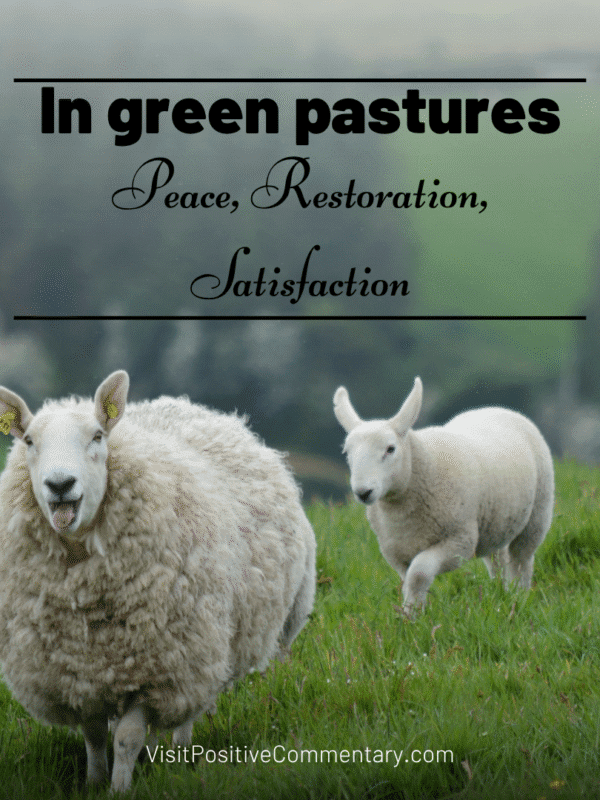
“He makes me lie down in green pastures” signifies more than passive observation. It speaks to the Shepherd’s intentional and thorough actions. These actions guarantee the well-being of His flock. The presence of lush green pastures is being represented as a rare, vital oasis. “Pastures of grass” underscores the exceptional abundance of God’s provision. It signifies the ideal conditions for His sheep’s optimal health. It also points to their contentment.
The Hebrew word for pastures is “Na’ah”. It conveys the idea of home, habitation, and a dwelling. It suggests a pleasant place evoking feelings of belonging, acceptance, security, and unconditional love. This starts as a simple agricultural image and then develops into a profound statement about God’s provision. Beyond literal sustenance, we can partake in God’s abundance and the spiritual nourishment He offers to His people. As His sheep, we are given a place of rest, provision, and peace, characterized by delight and plenty.
Sheep are inherently skittish and easily alarmed, prone to panic, and are largely incapable of assuaging their fears. For these animals to genuinely lie down and find rest, specific environmental and social conditions are necessary. The Shepherd must actively and deliberately orchestrate these conditions. These include the assurance of safety, like freedom from predators. A diligent shepherd would often sleep with the flock. He positioned himself at the enclosure’s entrance to protect against intruders.
The flock must be free from agitation caused by unruly members. These animals often respond to social order. Tension arises when a “bully sheep” provokes others and prevents true rest. The shepherd must intervene to quiet or remove these disruptions.
Protection from pests is also crucial, as flies and parasites can drive sheep to extreme frustration, making rest impossible. Historically, oil served as a primary defense against these pests. Shepherds cleared grazing areas and meticulously applied insecticide or oil to their flock. This practice foreshadows the later mention of anointing with oil in Psalm 23:5.
Finally, the sheep’s hunger must be satisfied. They are incapable of independently locating adequate grass and water. If they are hungry, they will wander around aimlessly. The shepherd will exhaust great pains to find and prepare good grazing land.
“He makes me lie down” illustrates gentle yet firm guidance, which leads the sheep to a state of profound peace. Sometimes intervention is even necessary to bring contentment. It involves providing more than mere sustenance. It focuses on cultivating precise conditions for deep repose. This ensures the sheep are fully fed and satisfied. This detailed understanding of a shepherd’s actions illuminates a significant aspect of divine care that God provides. His care is proactive, intentional, and at times, firm.
God’s deliberate leadership, sometimes forceful yet gentle, tackles deep-seated anxieties. These anxieties come from external threats, internal flock dynamics, or basic needs like hunger. The dimension of divine shepherding prioritizes ultimate well-being over immediate comfort or preferences. The causal relationship is clear. The sheep’s inherent fear and agitation lead to unrest or a tendency to wander. The shepherd actively intervenes to guarantee safety and manage the flock. He protects against pests and gives abundant food. These actions create optimal conditions for peace and provision. This allows the sheep to lie down and experience deep, restorative rest.
Steady Your Heart
- Pray: That you are anxious for nothing. Make your requests known through prayer and supplication. The peace of God, which surpasses all comprehension, will guard your heart and mind in Christ Jesus. (Philippians 4:6)
- Reflect: Ponder your thoughts and words each day. Examine whether they are true, honorable, right, pure, lovely, and of good repute. Consider if they are excellent and worthy of praise. If not, change what you are thinking about. Examining the words you speak will help you measure and analyze your thoughts. (Philippians 4:7)
- Share: Share the message of peace, contentment, restoration, and care that God provides. (Psalm 23:2)
P14-202506
Share this:

Discover more from Positive Commentary™
Subscribe to get the latest posts sent to your email.
Related Posts